A custom screen-printing business, run on email — rebuilt as one design system serving three very different users: the customer, the sales team, and the print floor.
Fitness Wear ran on phone and email. Every order — quantities, sizes, ink colours, artwork, deadlines — lived in a Gmail thread. It felt personal; it didn't scale. By 2021 a five-year customer still had to re-explain his order from scratch, and one missed reply could derail a press date. Money was being left on the table.
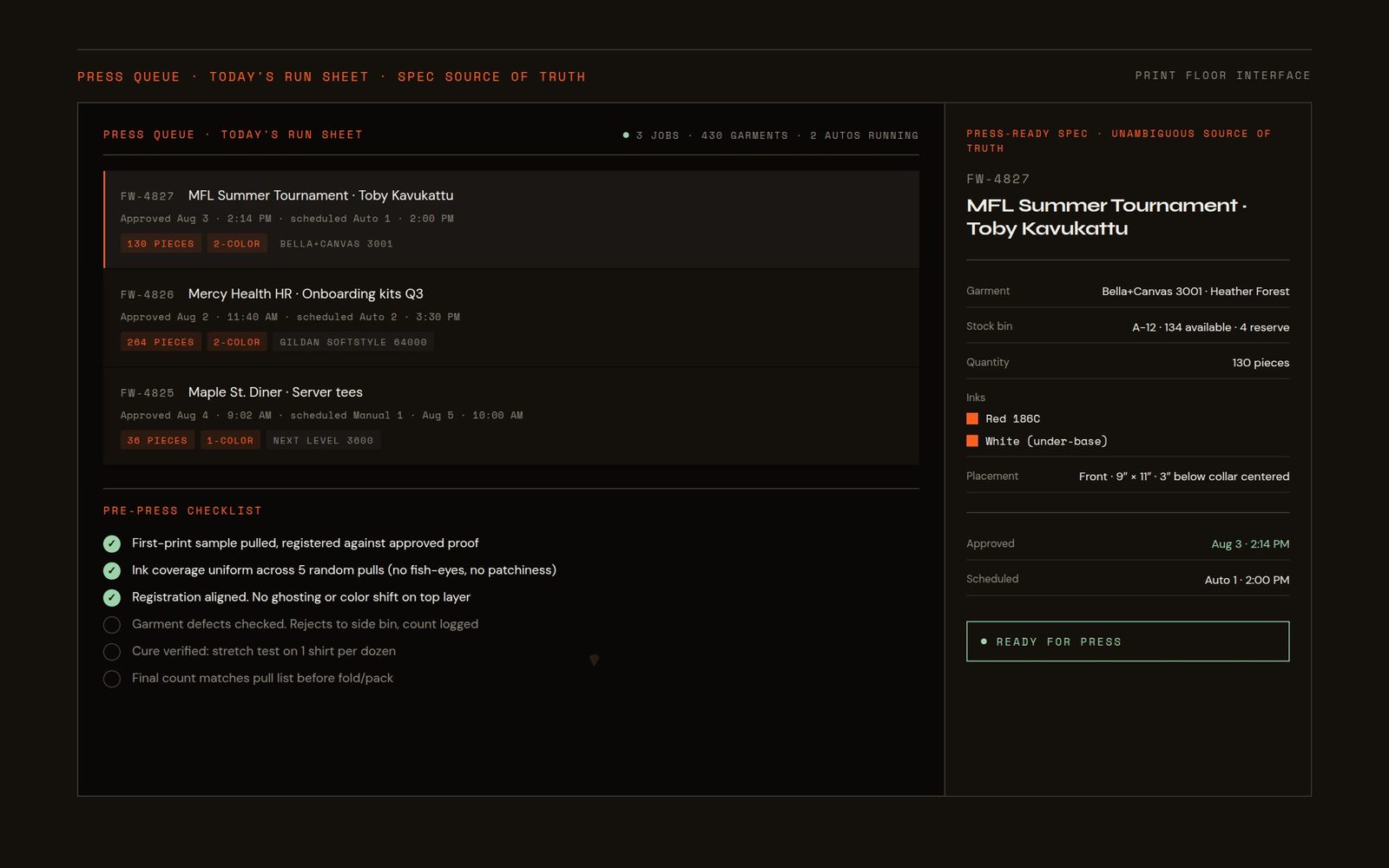
The design problem was three audiences pulling in different directions. Customers — often non-designers in a hurry — needed to specify a job and see a price with confidence. The sales team needed simple orders to flow through automatically and to step in only where judgement was required. The print floor needed an unambiguous spec, because a misread number is a ruined run. The work was in resolving those tensions, not pretending they didn't exist.
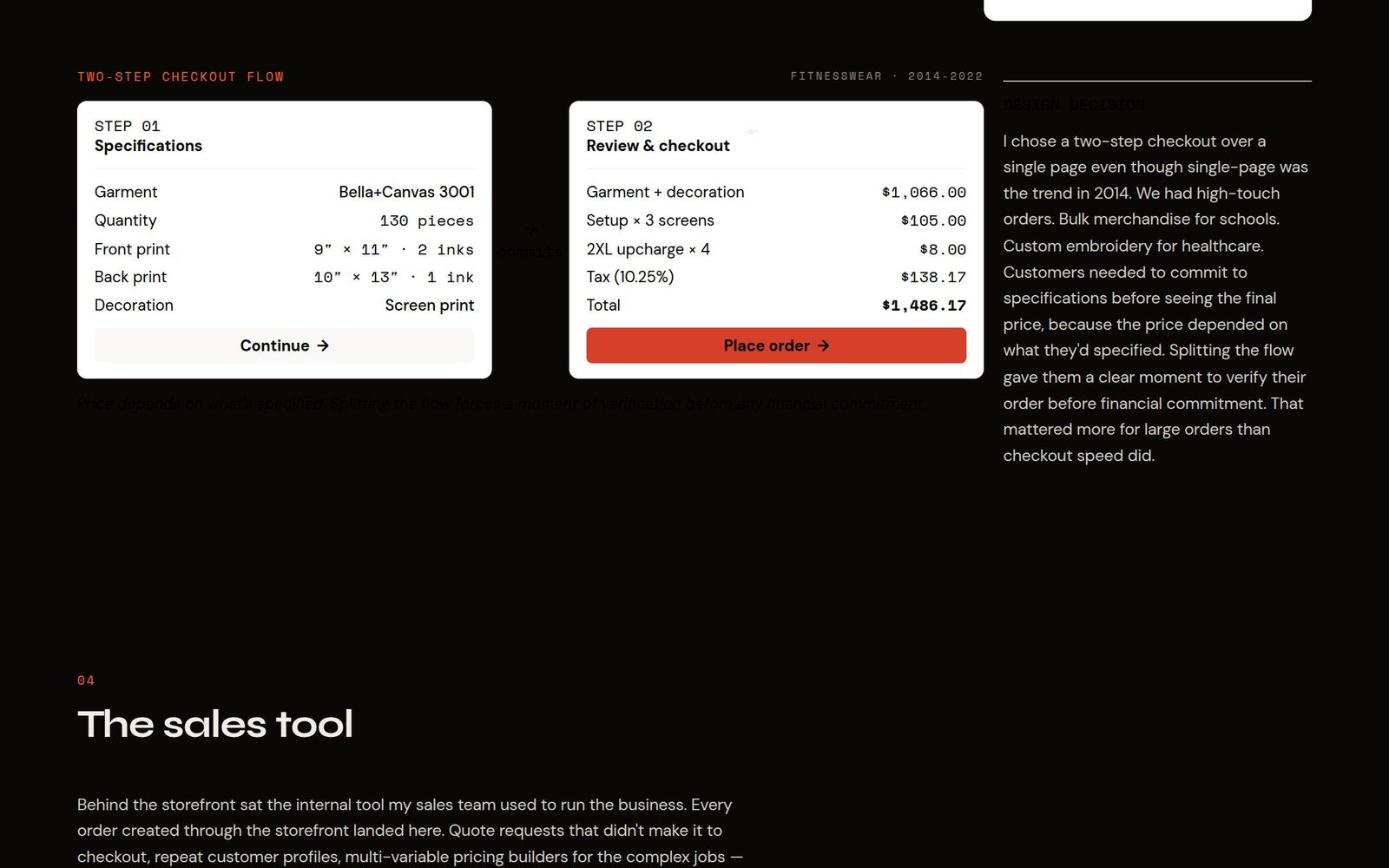
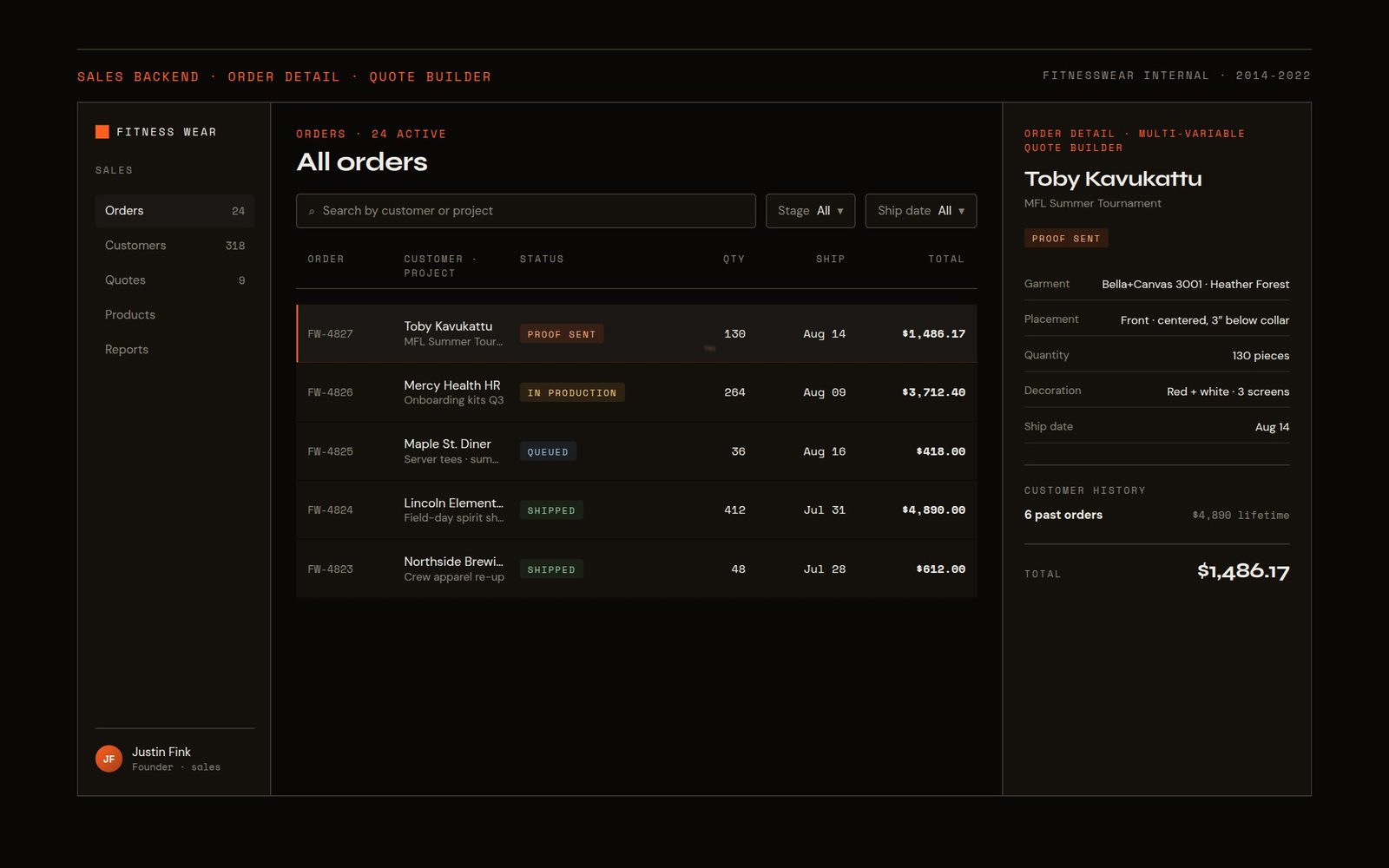
A customer storefront that turned plain-English requests into locked, print-ready specs — with an artwork-upload “contract” that caught file problems before press, and a two-step checkout that confirmed the spec before the price. Behind it, an internal sales tool with a multi-variable quote builder and repeat-customer history. And on the floor, a press-queue run sheet that was the single source of truth.
The system ran for the rest of the company's life — roughly 8,400 orders through it, about 15 sales-team hours recovered each week, and a repeat-customer rate up by 75%. Eleven years of running what I designed taught me how to build for users whose needs don't agree.